
industry dialogue
From ‘Made in China’ to Global Brands: Executive Roundtable at ANGELWELT China
China Fishing Exclusive Insight
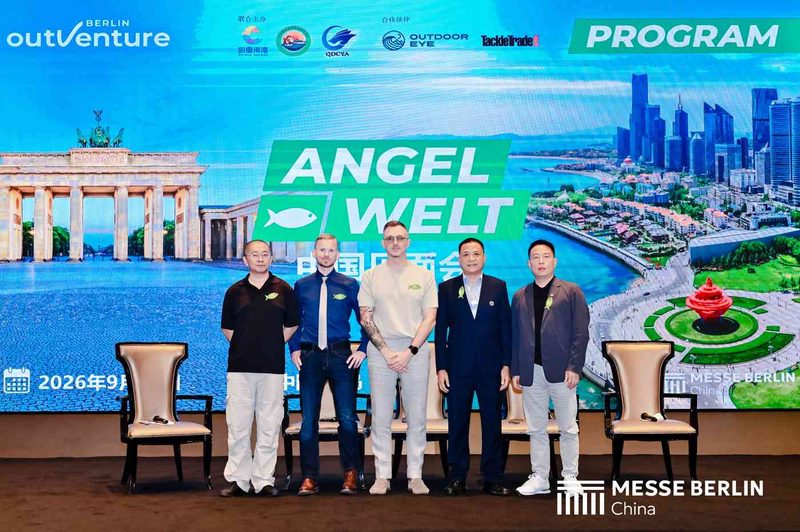
Special dispatch from the inaugural ANGELWELT China Meet-Up at Le Méridien Qingdao. Moderated by Robert for China Fishing.
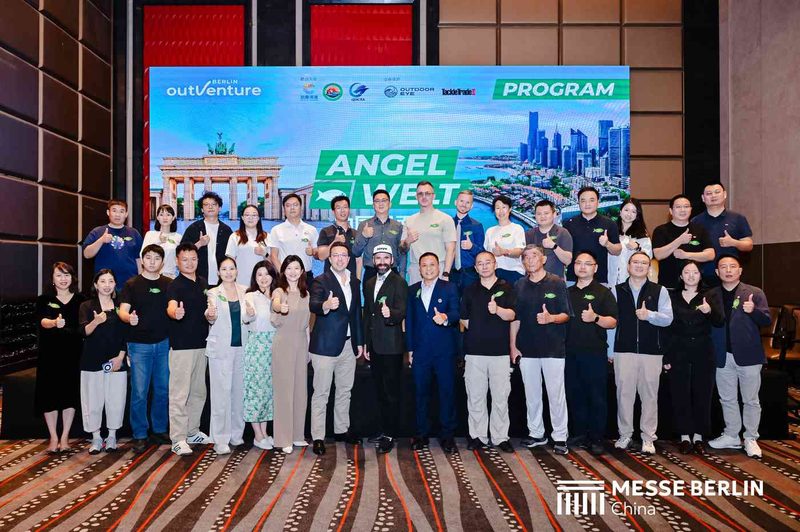
On 16 September 2026, the inaugural ANGELWELT China Meet-Up concluded successfully at Le Méridien Qingdao. Marking the first offline trade gathering in China for Europe’s leading consumer-driven sportfishing exhibition, the event brought together 50 executive delegates from across the Chinese and European fishing tackle and outdoor industries.
The central aim was to explore commercial opportunities across cross-border trade, regulatory market access, brand marketing, and distribution partnerships.
As the moderator of the headline 40-minute executive roundtable, I went in anticipating the familiar, polite exchange of corporate generalities. Instead, the moment we sat down, the conversation cut straight through superficial slogans and pushed deep into the operational marrow of industrial transformation. Framing our session around “From Made in China to Global Brands,” our four panellists—representing two European tackle businesses, a domestic manufacturing enterprise, and a national industry association—delivered an exceptionally candid and substantive dialogue.

1. Fabian Kraft: Consistency Trumps Rock-Bottom Pricing
Much of the debate’s structural backbone came from our two European guests, Fabian Kraft and Pierre Blanquett, who approached the market from very different vantage points.
Fabian Kraft, Founder and CEO of Advanced-Fishing and Nippon-Tackle, oversees multiple international fishing and marine equipment brands. When I pressed him on where Chinese enterprises stumble most frequently during overseas expansion, he bypassed the usual clichés about cultural differences:
“What European buyers prize most is operational consistency rather than rock-bottom pricing. It is not about the build quality of a single isolated batch, but long-term uniformity and unbroken adherence to European compliance and environmental regulations. The suppliers that secure enduring, multi-year contracts are invariably those who invested early in traceability, eco-certifications, and mature quality management systems.”
This pragmatic observation quieted the room, effectively transforming overseas market entry from a vague aspiration into a measurable operational capability.
The Philosophy of Smart Tackle
Later in the discussion, Kraft turned to the emerging category of smart tackle, offering an observation that Chinese innovators should note carefully:
- Decision Support vs. Automation: European angler interest in GPS-guided rods, AI-assisted fish-finding apps, and digital smart reels is steadily climbing, but European anglers strictly demand decision support rather than automated systems that replace human judgment and technical craft.
- The Divergence in Product Logic: This philosophy contrasts sharply with the domestic Chinese market’s appetite for fully automated high-tech angling, meaning Chinese smart tackle firms cannot simply copy-paste their domestic product logic onto Europe.
- Supply Chain Integration: Kraft also disclosed that several product lines across his own brand portfolio already rely on deep integration with Chinese manufacturing partners.
Looking ahead in our closing rapid-fire round, Kraft predicted that the historical halo around European tackle brands inside the Chinese domestic market will rapidly fade:
“While deep bilateral supply chain synergy remains the defining theme, relying solely on a ‘European origin’ label will no longer sustain a competitive advantage.”
2. Pierre Blanquett: Cultural Nuances and Brand Soul
Pierre Blanquett, Co-founder of emerging European outdoor brand NORDLING OUTDOOR, brought the sharp cultural sensibilities of a brand builder.
Addressing the primary barriers European labels face when executing content marketing in China, he stressed that linguistic translation is secondary compared to the friction of mismatched cultural settings:
- Pay-Lakes vs. Public Waters: China’s commercial pay-lake scene and high-stakes pay-to-fish culture simply do not exist in Europe. Directly transplanting European brand narratives leaves Chinese consumers detached, yet completely surrendering to local trends risks eroding the brand’s core European heritage.
- Social Media Dynamics: Comparing social media ecosystems, Blanquett noted that platforms like Douyin and RED demand rapid-fire content cycles fueled by immediate emotional hooks, whereas European YouTube channels and specialist angling forums rely on exhaustive technical teardowns and hard-won community credibility.
- Agility of Challenger Brands: On balancing European heritage with Chinese production, Blanquett noted that emerging challenger brands enjoy agility without historical baggage, though they must build distribution networks and buyer trust from the ground up.
The Qingdao Mackerel Analogy: Universal Touchpoints
I then asked the panel a specific localized question: Qingdao is famed for its coastal Spanish mackerel run, when millions of fish migrate past the shoreline between April and May across four major regional grounds. How should Chinese manufacturers translate such regional product stories so that European anglers genuinely understand and buy into them?
Blanquett’s response proved to be the most insightful remark of the day:
“The key lies in identifying universal emotional touchpoints. European anglers possess a deep reverence for nature, quiet solitude, and traditional craft, whereas Chinese anglers carry immense enthusiasm for operational efficiency, advanced gear, and dynamic social community. These two perspectives are not contradictory; they can amplify each other if framed correctly.”
Furthermore, Blanquett emphasized that shifting toward sustainability has moved from being a burdensome compliance cost to a defining engine of brand differentiation.
3. Lou Jiangwei: The Manufacturing Heartland’s Pivot
Representing domestic manufacturing, Lou Jiangwei, Managing Director of Dongyang Shanye Fishing Tackle, brought a ground-level perspective from China’s manufacturing heartland.
Founded in 2011, designated a national high-tech enterprise in 2024 with six registered trademarks and seven patents, and instrumental in establishing the Dongyang Tackle Industry Association, Lou outlined the invisible hurdles of migrating from pure OEM contract manufacturing to proprietary branding.
In his view, the real threshold is neither raw tooling capability nor sales channels, but an intuitive grasp of European angling culture:
- Culture Over Tooling: Reflecting on his early export ventures, Lou explained how packaging aesthetics, eco-compliance, and local consumer rituals frequently proved far more challenging than blank design itself.
- Regulatory Divergence: While Shanye is currently exploring smart gear, regulatory discrepancies across export markets remain complex.
- Compliance as Domestic Edge: Interestingly, Lou noted that technical investments originally made to satisfy strict European mandates—such as non-lead weights and biodegradable soft materials—have unexpectedly evolved into high-margin competitive advantages in China’s domestic retail market.
In our rapid-fire round, Lou predicted that China’s hidden manufacturing champions will steadily emerge onto the global stage through collaborative industrial cluster initiatives.
4. Chai Zhong: Brand Premium and Structural Frameworks
Chai Zhong, Vice President of the Game Fishing Branch and Deputy Director-General of the Travel and Angling Branch of the China Recreational Angling Association (CAA), framed the issue through the lens of macro-industry integration.
He highlighted the core paradox:
“China produces over 70% of the world’s fishing tackle, yet the vast majority of brand premium remains captured overseas. The defining bottleneck for domestic firms is not production volume or engineering, but brand equity itself.”
From an association perspective, Chai underscored the urgent necessity of:
- Standardized Export Frameworks: Establishing clear chemical, material, and packaging compliance benchmarks across regional clusters.
- Disciplined Capital Integration: Moving away from price-slashing price wars toward pooled R&D investments.
- Cross-Sector Convergence: Fostering synergy between marine leisure tourism, sport venues, and high-end tackle development.
Executive Q&A and Key Industry Takeaways
During the interactive audience session, questions centered around:
- The baseline financial and compliance entry thresholds for small-to-medium tackle manufacturers;
- Omnichannel strategies for European brands entering China;
- Supply chain adaptation under tightening international chemical regulations (REACH, RoHS, PFAS phase-outs);
- Cross-border standards for smart tackle.
Kraft and Blanquett tackled these queries from buyer and brand-building angles, Lou grounded them in factory-floor reality, and Chai outlined structural industry solutions.
Three Guiding Principles for Global Tackle Trade
In drawing the session to a close, three defining industry takeaways emerged:
- Convergence: Successful global expansion demands the seamless convergence of product integrity, authentic brand narrative, and disciplined distribution channels.
- Mutual Co-Creation: True localization is never a one-way adaptation but mutual cross-border co-creation between European angling culture and Chinese manufacturing prowess.
- Value over Cost: Chinese tackle manufacturing is decisively shifting from sheer cost-efficiency to durable quality value, and from contract OEM toward authentic global brands.
Recommended Chinese Suppliers & Trade Gateways for this Topic
Direct factory contacts and trade channels matched to this briefing across Weihai, Cixi, Cangzhou, Dongyang, and Tianjin:
Found a mistake? See our corrections policy. Have a tip or factory inquiry? Contact the editorial desk.